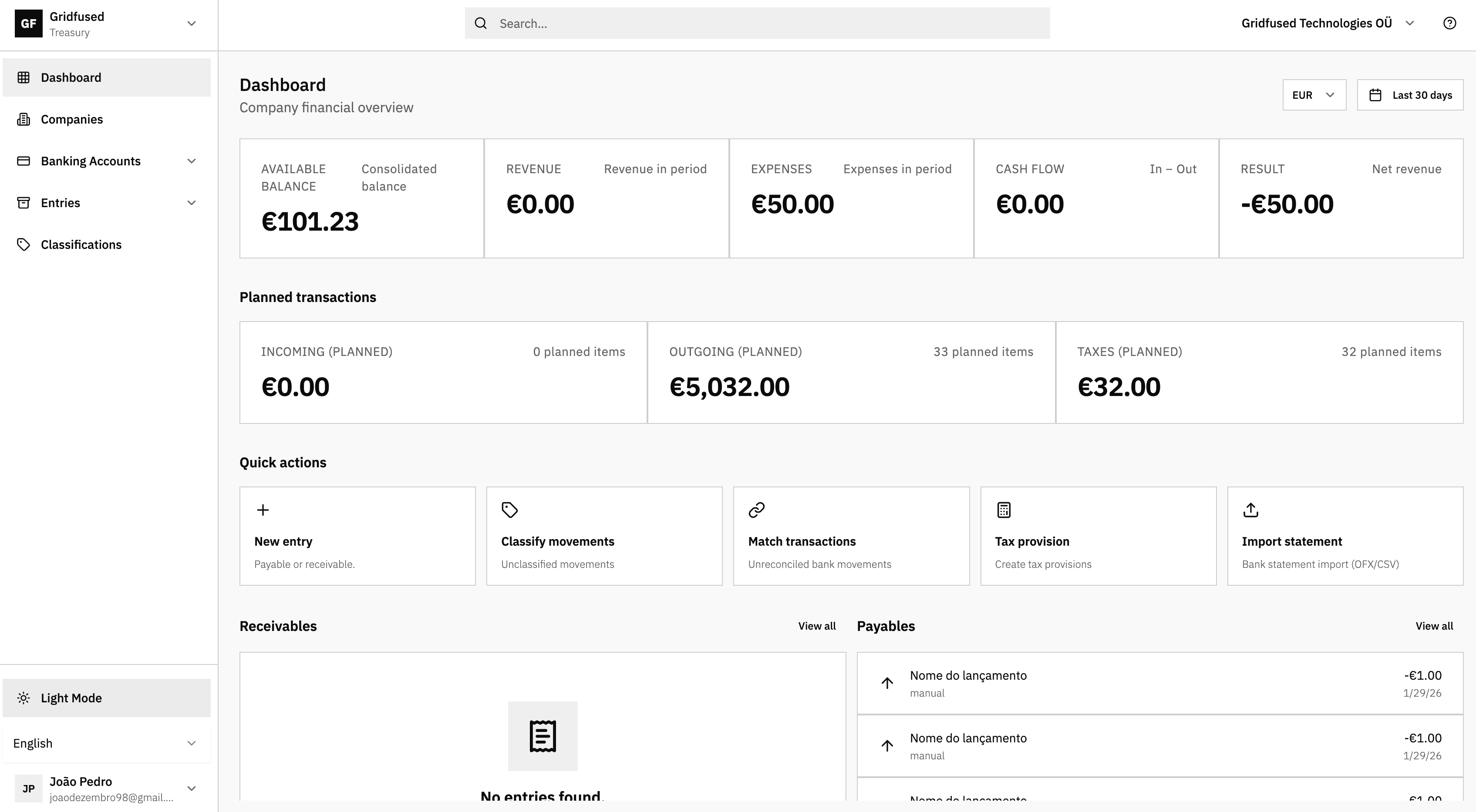






Treasury
StartupOS Treasury helps founders keep accounts, cash movement, and financial context in one administrative view.
View module
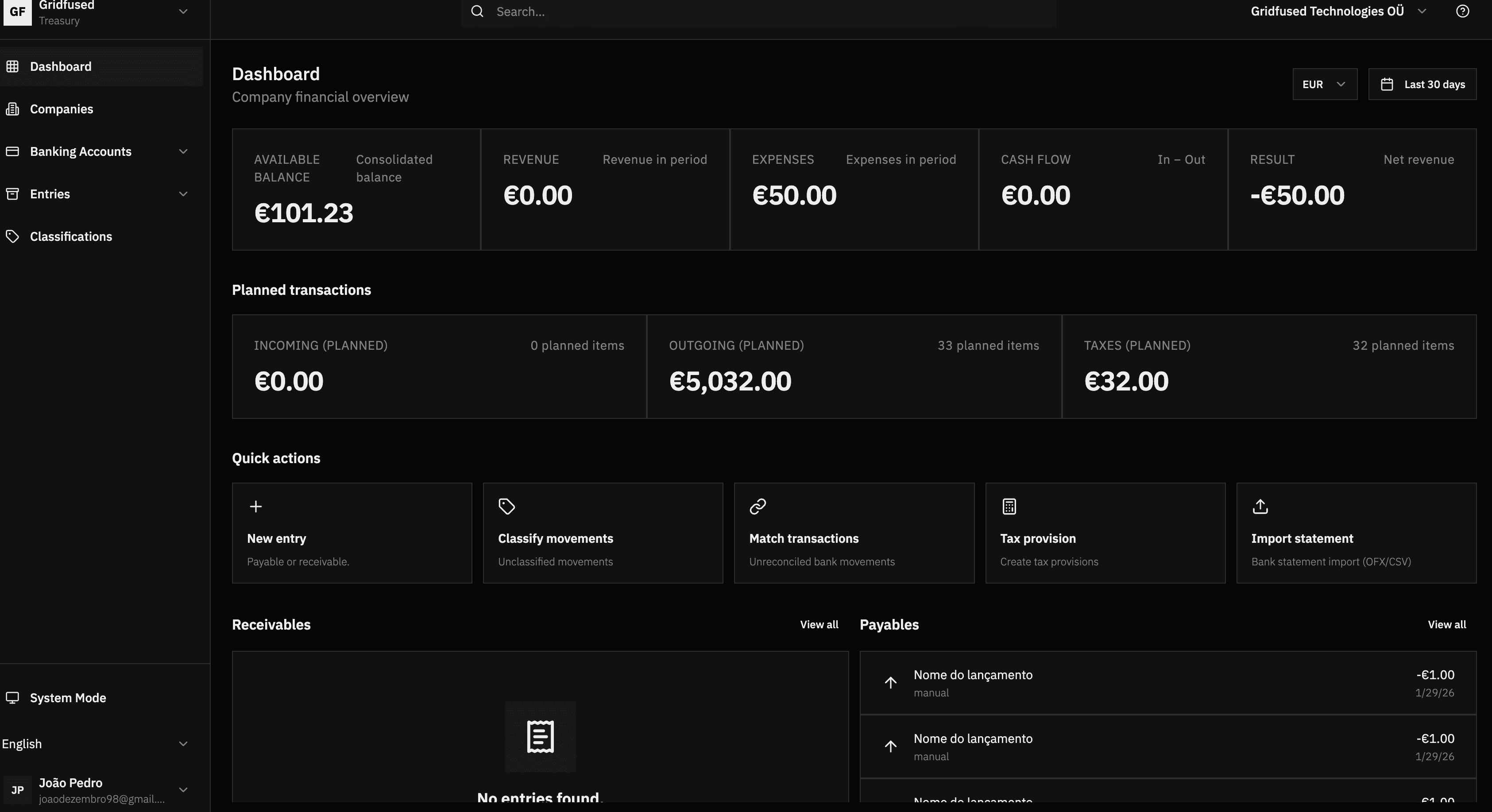
StartupOS
StartupOS helps founders centralize treasury, invoices, contracts, and secrets in one structured product, so the company can operate with more clarity and control.
Flat price. Core modules included. No per-seat model.
StartupOS is for founders who still deal directly with contracts, invoices, cash context, credentials, access, and company records. It is not built for enterprise departments or teams that want infinite customization.
Solo founders
Founding teams
Early-stage startups
Small tech-led companies
Remote teams with lean operations
Founders tired of scattered admin
A startup can survive with documents and spreadsheets at the beginning. But as contracts, invoices, cash records, credentials, suppliers, and obligations multiply, every disconnected process becomes a liability. The problem is not only lack of tools. It is lack of system.
StartupOS is opinionated by design. It centralizes treasury, invoices, contracts, secrets, and administrative records without asking founders to design the operating layer from scratch in generic tools.
StartupOS Treasury helps founders keep accounts, cash movement, and financial context in one administrative view.
View moduleStartupOS Invoices helps founders organize invoices, billing records, revenue documents, and payment status in one structured workflow.
View moduleStartupOS Contracts helps founders keep agreements, versions, parties, documents, status, and reminders in one structured place.
View moduleStartupOS Secrets Manager helps small teams organize credentials, keys, tokens, access notes, and sensitive operational records.
View moduleStartupOS does not promise automatic growth, funding, or perfect execution. It gives the company a clearer base for administrative work.
Treasury context, invoices, contracts, secrets, and important administrative records live closer together.
Founders rely less on spreadsheets, folders, messages, and generic workspaces used as makeshift operations.
The company gets more structure around contracts, invoices, cash context, credentials, and recurring follow-up.

When administration has no central structure, the company starts depending on the founder's memory. StartupOS gives that work a defined place before it becomes expensive to fix.
Contracts get lost across folders, inboxes, and versions.
Invoices become harder to track as billing work repeats.
Credentials spread across people, tools, and private notes.
Financial context lives in portals, exports, spreadsheets, and memory.
Operational decisions lose context when records are disconnected.
Less fragmentation. More operational control.
One plan. Core modules included. No per-seat pricing. No artificial plan complexity.
One plan. Core modules included. No per-seat pricing. No artificial plan complexity.
Exact monthly and annual pricing is listed on the pricing page.
View pricingPractical answers for founders evaluating the work.
No. StartupOS is not for tasks, sprints, roadmaps, or product delivery. It is for startup administration.
No. StartupOS is lighter and more focused than an ERP. It is built for founders and small teams, not enterprise departments.
No. StartupOS helps organize financial operations and invoices, but it does not replace accounting, tax filing, or local fiscal obligations.
No. StartupOS helps organize contract records and status, but it does not provide legal advice or replace lawyers.
No. StartupOS includes secrets management for operational credentials and access context, but it is not positioned as a full enterprise password management platform.
StartupOS may support AI-enabled workflows where useful, but the core value is operational clarity, not AI-first positioning.